





As organisations across Malaysia accelerate investments in artificial intelligence (AI), experts warn that many risk widening the AI capability gap by investing in technology faster than they prepare their people.
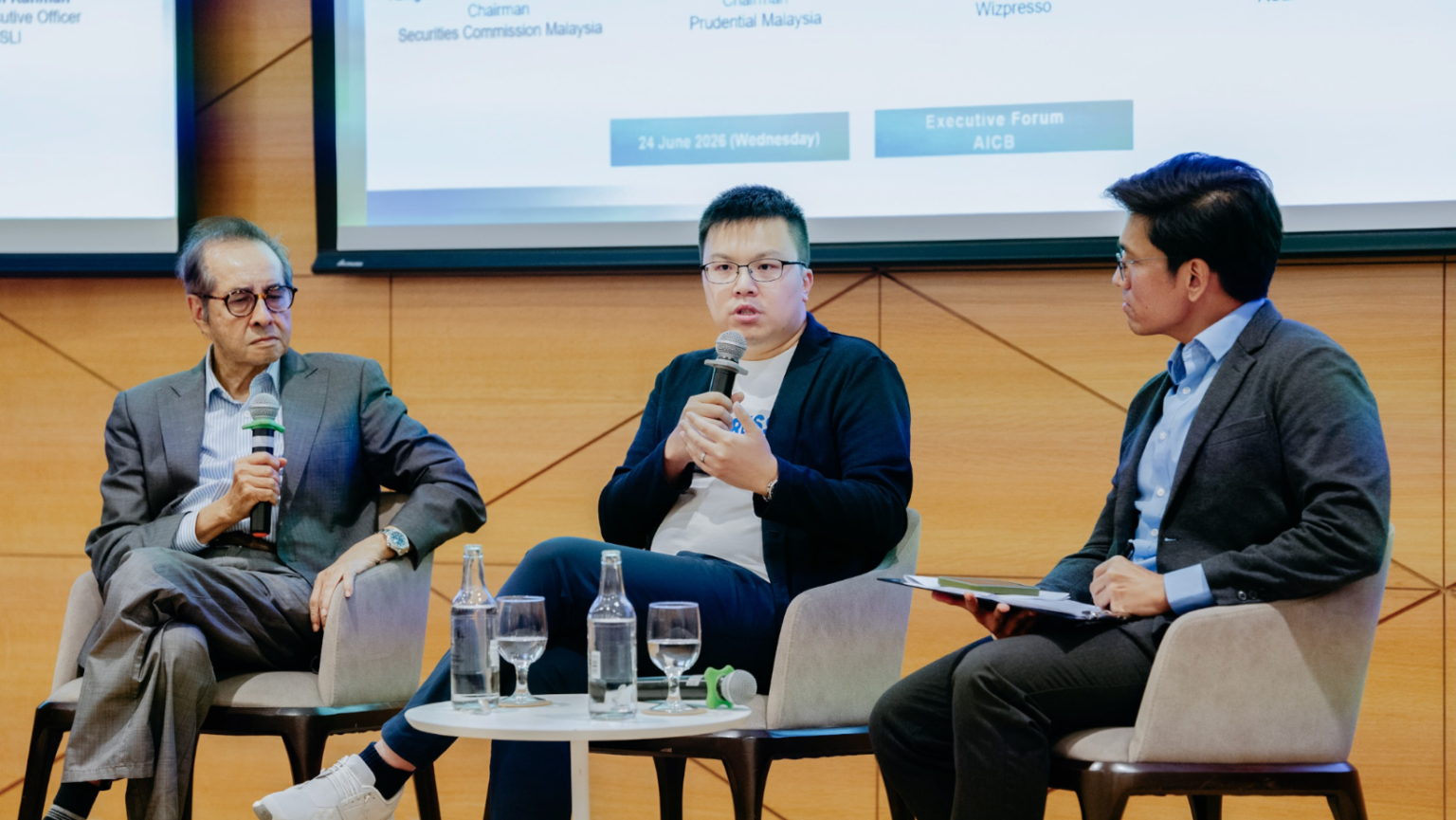
This was a key message from a recent leadership forum hosted by ICAEW Malaysia in collaboration with FIDE FORUM – From Oversight to Foresight – where leaders in governance, technology and finance explored how AI is reshaping financial institutions and the leadership capabilities needed to harness its full potential.
Moderated by Danial Rahman, CEO of ASLI, the panellists stressed that AI is not simply a technology challenge, but a governance and people imperative. As Danial emphasised during the start of the session, more than ¾ of the audience consisting of professional bankers and chartered accountants are already using AI in their regular work and personal routines.
As AI automates routine analytical work, organisations will increasingly rely on professionals who can exercise sound judgement, think critically, challenge AI-generated insights, and navigate the ethical and governance complexities of AI.
For chartered accountants, the shift is especially significant. Beyond supporting AI adoption, they are increasingly expected to advise organisations on governance, risk management and workforce readiness. Organisations that invest only in AI technology, without developing the human capabilities to govern and use it effectively, risk falling short of achieving sustainable, long-term value.
Why This Matters to the Profession
Dato’ Mohd’ Faiz Azmi, ICAEW Council Member and Chairman of Securities Commission Malaysia, highlighted to the panellists and audience that AI should not be viewed as simply another technology upgrade, but as a transformative force that demands a fundamental rethink of leadership, talent and governance. Unlike traditional technologies with predictable, rules-based outcomes, AI introduces uncertainty, making human judgement and oversight more important than ever.
As organisations accelerate AI adoption, technical expertise alone will not be enough. Success will depend on professionals who can think critically, ask the right questions, challenge AI-generated outputs and apply sound judgement to complex business decisions.
The conversation between the panellists also underscored the importance of responsible AI governance. Because AI systems learn from data and can inherit biases or overlook critical context, organisations must ensure appropriate oversight, accountability and ethical decision-making.
This reinforces ICAEW’s view that chartered accountants have an increasingly important role in strengthening governance, building trust and ensuring AI delivers sustainable long-term value.
The Governance Gap
Research from the Hong Kong Chartered Governance Institute reveals the scale of the challenge. Calvin Cheng, Founder of Wizpresso, shared findings from an analysis of over 2,500 listed companies, “We found that 88 percent of companies talked about AI in their annual reports and strategies,” Cheng reported. “But less than 25 percent actually talked about AI governance and AI risk management.”
The findings also highlighted a growing disconnect among smaller organisations, many of which are promoting AI ambitions without building the capabilities needed to deliver meaningful outcomes.
“In some organisations, many keep talking about AI – perhaps hoping for short-term gains in their share price—but they lack the foundations to execute.” He stressed that AI success depends as much on workforce capability as technology investment. “Giving people the right tools are not enough. It’s like giving an iPad to a monkey,” he remarked. “AI literacy is one of the first stages of the journey. The real question is: how do we equip people with the knowledge and training to use these tools effectively and efficiently?”
The third panellist, Dato’ Seri Hamzah Kassim, Chairman of Prudential Assurance Malaysia – who advises boards on technology governance – said many AI initiatives stall not because of technology, but because leadership is unprepared to drive enterprise-wide transformation.
“Most organisations remain stuck at the experimental stage due to limited risk appetite, talent shortages, challenges in proving ROI, and the scale of change required,” he said. “AI is not a project, it is a business and operating model transformation.”
“AI failures are rarely technical,” he argues. “They’re governance failures. When boards and management aren’t working together as a team, implementation stalls.” Organisations are applying old-era thinking to new-era technology. They treat AI as a system to be implemented rather than a capability to be cultivated, and they hire accordingly.
A Different Way of Thinking About Talent
The logic-based era rewarded a certain profile: analytical, procedural, precise. The AI era demands something different, professionals who think laterally, ask better questions, and are not afraid to challenge what AI produces.
The message is clear: AI is not replacing human capability, it is redefining it. While technical skills remain essential, competitive advantage will increasingly belong to organisations that develop people who can exercise judgement, interpret context, challenge assumptions and make decisions beyond the reach of machines.
For boards and business leaders, that means rethinking AI as more than a technology investment. Its long-term success will depend not on the sophistication of the technology alone, but on the strength of an organisation’s leadership, governance, culture and talent to deploy it responsibly and create lasting value.
For chartered accountants, the shift opens a clear opportunity. Trusted for their integrity, objectivity and judgement, they are well placed to bridge the gap between AI capability and responsible decision-making. As AI risks and opportunities grow more complex, accountants will be central to ensuring innovation is matched with accountability and strong governance.
This reflects a broader global shift in how organisations are redefining competitive advantage. As AI tools become more accessible and widely adopted, technology itself will become less of a differentiator. Instead, the organisations that lead will be those that combine AI with distinctly human capabilities, critical thinking, ethical judgement, curiosity and the confidence to question AI-generated outputs rather than simply accept them.
The future of work will not be defined by a race between humans and machines. It will be defined by how effectively people and AI work together. In that future, the organisations that invest as much in developing human judgement as they do in deploying artificial intelligence will be the ones best positioned to create long-term value.
Legal Disclaimer: The Editor provides this news content "as is," without any warranty of any kind. We disclaim all responsibility and liability for the accuracy, content, images, videos, licenses, completeness, legality, or reliability of the information contained in this article. For any complaints or copyright concerns regarding this article, please contact the author mentioned above.